Money Motion 2026 Recap: Key Insights from Fintech Leaders in Zagreb
On March 11–12, 2026, Money Motion once again brought the fintech world to Zagreb Fair — and it didn’t take long to feel that this wasn’t just another industry gathering.
Across five stages, 3000+ attendees, and two packed days, conversations moved beyond trends and into something more concrete: how fast things are actually changing, and what that means for the way we build, secure, and experience financial services.
Supported by key partners including ASEE, Monri and Payten — who are also among the co-founders of the conference — Money Motion 2026 once again created a strong platform for addressing both the challenges and opportunities shaping a fast-moving industry.
ASEE and Monri were proud to actively contribute to these discussions, with experts taking part across multiple stages and formats — from keynote talks to panels and fireside chats.
Rethinking Control in the Digital Economy
Igor Gržalja led two conversations that touched on some of the biggest questions in fintech today.
On the Fintech 2030 Stage, he moderated a panel exploring control, privacy, and identity in the world of programmable money. The discussion unpacked how digital wallets are evolving into much more than payment tools — becoming central points of identity and influence in the digital economy.
In a separate fireside chat on the future of payments, the focus shifted to the bigger picture: Europe’s digital ambitions, the role of open banking, and how regulation, security, and innovation are shaping the competitive landscape.

Igor Gržalja, Country Leader at ASEE | Photo: Samir Cerić Kovačević
Cybersecurity in the Age of AI
If there was one topic that introduced a sense of urgency, it was cybersecurity.
Viktor Olujić moderated a discussion focused on how AI is reshaping the threat landscape — and not in a distant future, but right now.
One of the key takeaways was the emergence of fully automated cyberattacks, where AI can execute complex fraud chains with minimal human input. At the same time, security teams are increasingly relying on AI to detect and respond to those threats.
The takeaway wasn’t just about technology — it was about timing. Understanding these shifts early is becoming just as important as the tools themselves.
Rise of Agentic Commerce
Damir Čaušević brought a different perspective, focusing on how commerce itself is evolving toward agentic commerce and rise of the AI agents.
The discussion explored what happens when software moves from assisting users to acting on their behalf — searching, comparing, and completing transactions based on intent. What recently felt theoretical is now quickly becoming a real consideration for the industry.
But behind that shift lies a complex foundation: secure identity frameworks, tokenization, machine-readable product data, and new approaches to fraud prevention. One message stood out — this change may happen faster than expected, and businesses that don’t adapt risk becoming invisible in a new kind of marketplace.
From Experimentation to Real AI Impact
The shift from “trying AI” to actually using it in production was another strong theme.
Zvonimir Mavretić joined a panel on enterprise automation, where the focus was on how companies are already applying AI to build faster, more reliable applications — and at the same time increasing the role of AI within those systems.
That dual impact — changing both how software is built and how it behaves — is quickly becoming a defining pattern across industries.
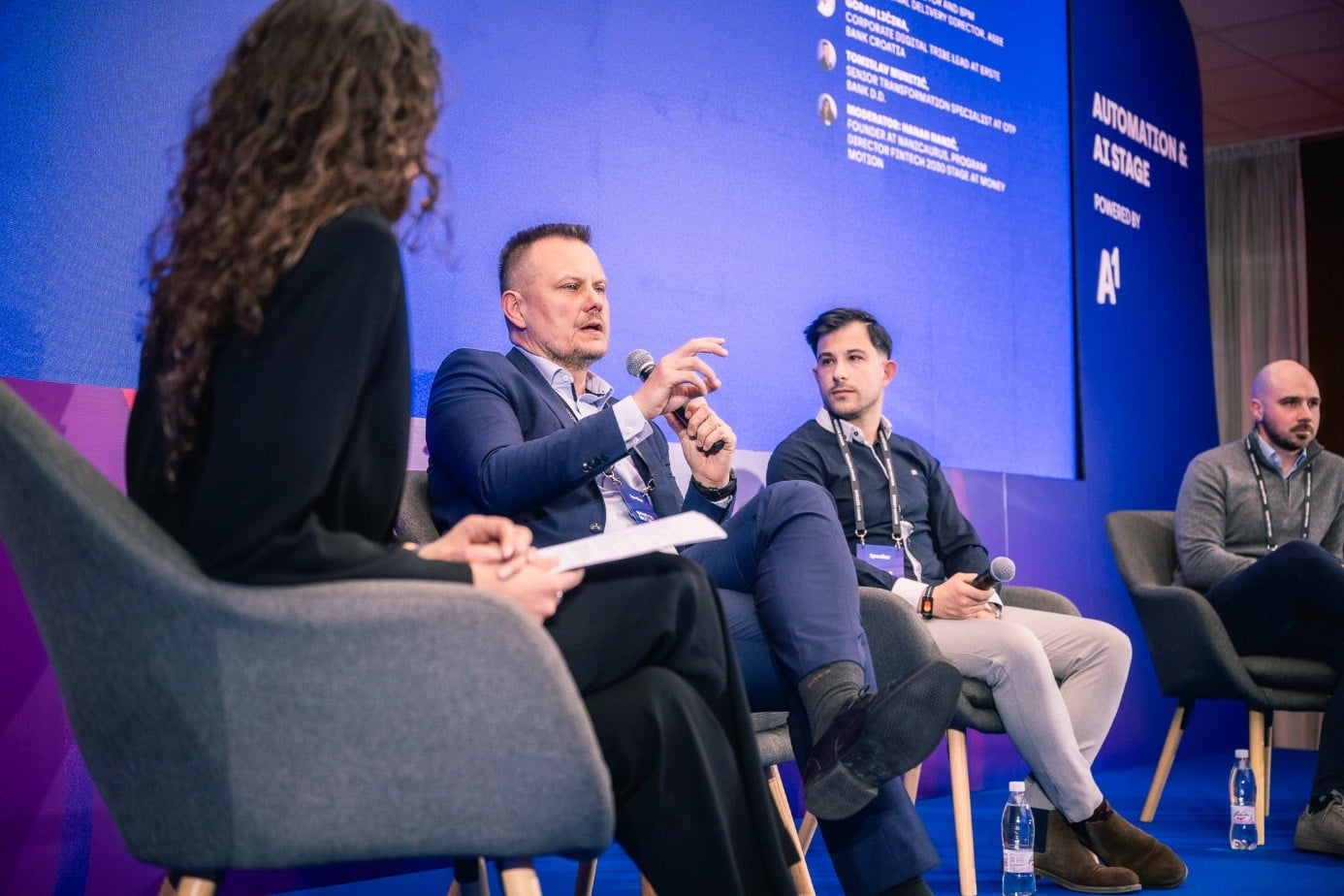
Zvonimir Mavretić, BPM International Delivery Director/Engineering Director |Photo: Marko Lopac
Turning Data Into Actionable Processes
Berislav Tomašić approached the topic from a process perspective.
His session explored how organizations can unlock the value of on-premise data and move from document intelligence to fully generated business processes. The emphasis was on connecting data, automation, and execution — turning what was once static information into something operational.
Digital Wallets Are Becoming More Than Payments
On the Main Stage, Ivan Glazer led a discussion on the evolution of digital wallets.
Rather than focusing on whether wallets will merge into a single solution, the conversation shifted toward coexistence — how different wallet types, identity solutions, and financial services will operate within the same ecosystem.
What’s clear is that wallets are no longer just about transactions. They’re becoming a core layer of digital interaction.
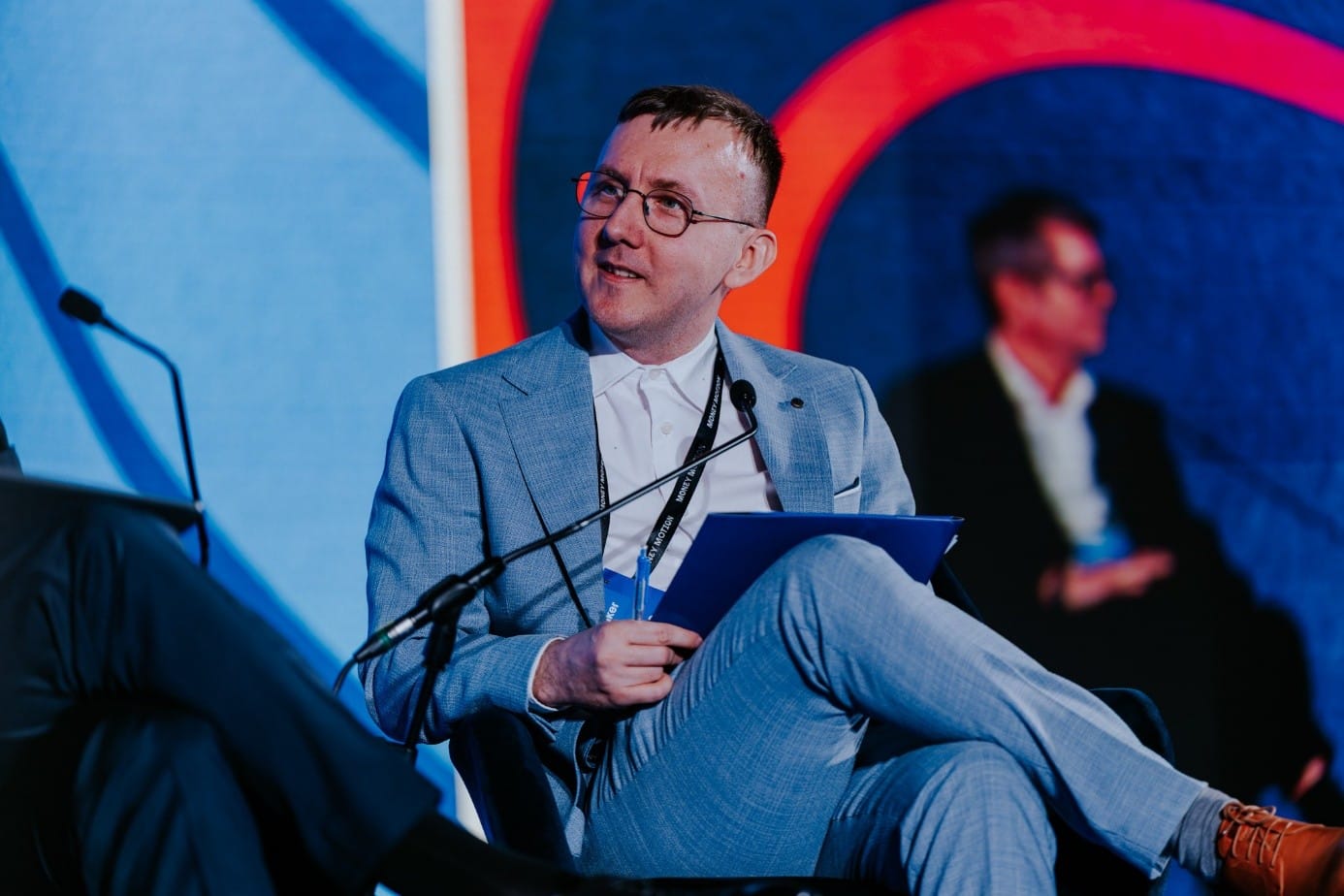
Ivan Glazer, Business Line Manager |Photo: Valerio Baranović
Are We Underrating Customer Readiness?
Closing the loop from a market perspective, Nikola Mehandžić moderated a panel focused on the next wave of commerce.
The discussion challenged a common assumption — that customers are not ready for digital payments. In reality, behavior is already shifting quickly, driven by global platforms and seamless online experiences.
From digital wallets to tokenization and instant payments, the technology is largely in place. The real question is whether businesses are keeping up — and whether they are offering the kind of experiences customers already expect.
A Shared Industry Direction
Across all sessions, one thing became clear: the industry is moving toward convergence — of technologies, use cases, and expectations.
From AI-driven development and automation to digital identity and programmable money, the discussions at Money Motion 2026 showed that innovation is no longer happening in silos. Payments, identity, data, and user experience are increasingly interconnected — and the organizations that recognize this early will be the ones shaping the future.
Looking Ahead
Beyond the stages, ASEE had the opportunity to connect with partners, clients, and industry peers, continuing conversations that go far beyond the event itself.
If this year is any indication, Money Motion will continue to grow as a key meeting point for the fintech ecosystem — and we’re already looking forward to what comes next!
If you want to better understand where the industry is heading, take a look at what was discussed at the Money Motion in 2025, MoMo 2024, and MoMo 2023. Each year highlights key shifts and shows how different trends are gradually coming together into a unified direction.

ASEE
Share
More from ASEE

How a Financial Institution Improved Its Mobile Banking Experience
A financial institution introduced a new mobile banking application

Dünya Katılım Bank Strengthens Application Security with ASEE InACT®
Dünya Katılım Bank, Türkiye’s only private participation bank with

Secure Payments Across Every Channel: CK Enerji Partners with ASEE & Payten
CK Enerji, one of Türkiye’s leading energy companies, has